
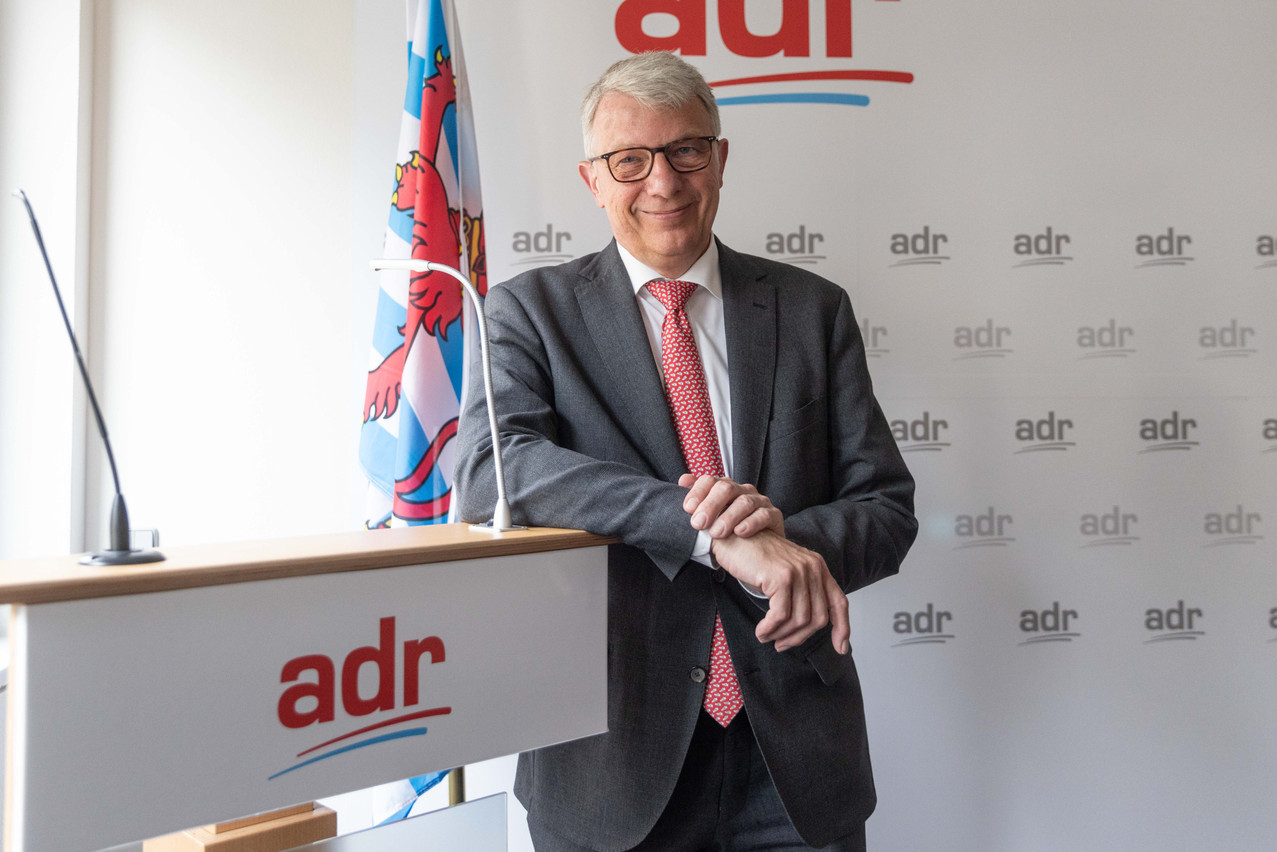

Intervention by MEP Fernand Kartheiser to the roundtable organised by the Permananent Mission of the Russian Federation to the OSCE on 22 June 2026
I admit: the title of this presentation might be exaggerated since it is – in principle – always possible to rearm a country. But I want to show some of the difficulties that Europeans face nowadays when they talk about rearmament, to become “kriegstüchtig” (war-capable / fit for war) as the Germans put it.
I would also like to admit from the start that I am not categorically opposed to a reasonable and responsible measure of rearmament in Western Europe. All states have a right to self-defence and should also be able to put up a credible defensive force against a potential aggressor. Since the armed forces in the Western European countries have been so massively neglected over the last decades, so systematically depleted, some efforts now seem unavoidable to bring them back to a defensible level. However, these enhanced capacities must always be clearly and visibly defensive and their introduction must be accompanied by diplomatic efforts in order to prevent misunderstandings and, above all, a new arms race.
The OSCE could of course be an ideal framework to discuss confidence-building measures and arms limitation treaties in the framework of a new European security architecture. It has served these purposes well in the past. It remains to be seen whether it could still serve that purpose in the future, since CBMs and CFE-type treaties are what we need again. Unfortunately, the OSCE itself has been weaponised against Russia in recent years and it unforgivably has not resisted, at least not sufficiently. An international organisation must always fight for its credibility. The OSCE has failed to do so. It remains to be seen whether the organisation can be saved.
Now let me start my presentation by emphasising that it is absolutely urgent to bring the Ukraine conflict to an end. Not only to stop the killing and suffering, but also to prevent a further deterioration of the geopolitical situation on the European continent.
But unfortunately, many have a manifest interest in prolonging the conflict instead of stopping it – not least the EU itself. It consciously and systematically uses the crisis in Ukraine to continue the process of centralisation of power in the hands of its institutions at the expense of its Member States. It builds up defence and military